



On the feast of the Entry of the Lord into Jerusalem, a divine service was celebrated in the church of our parish.
The service was presided over by the rector of the parish, Archpriest Vadim Zakrevsky.
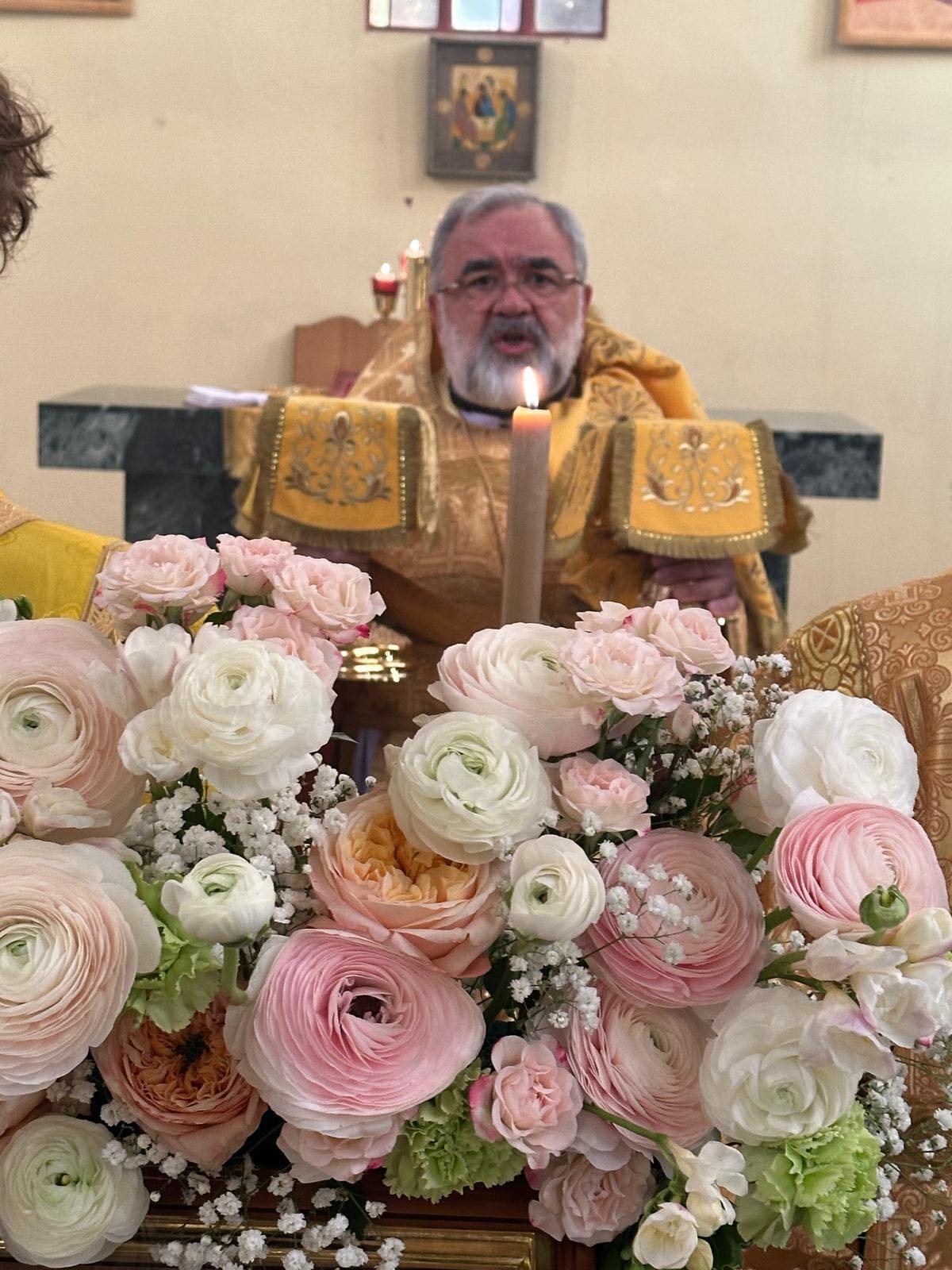
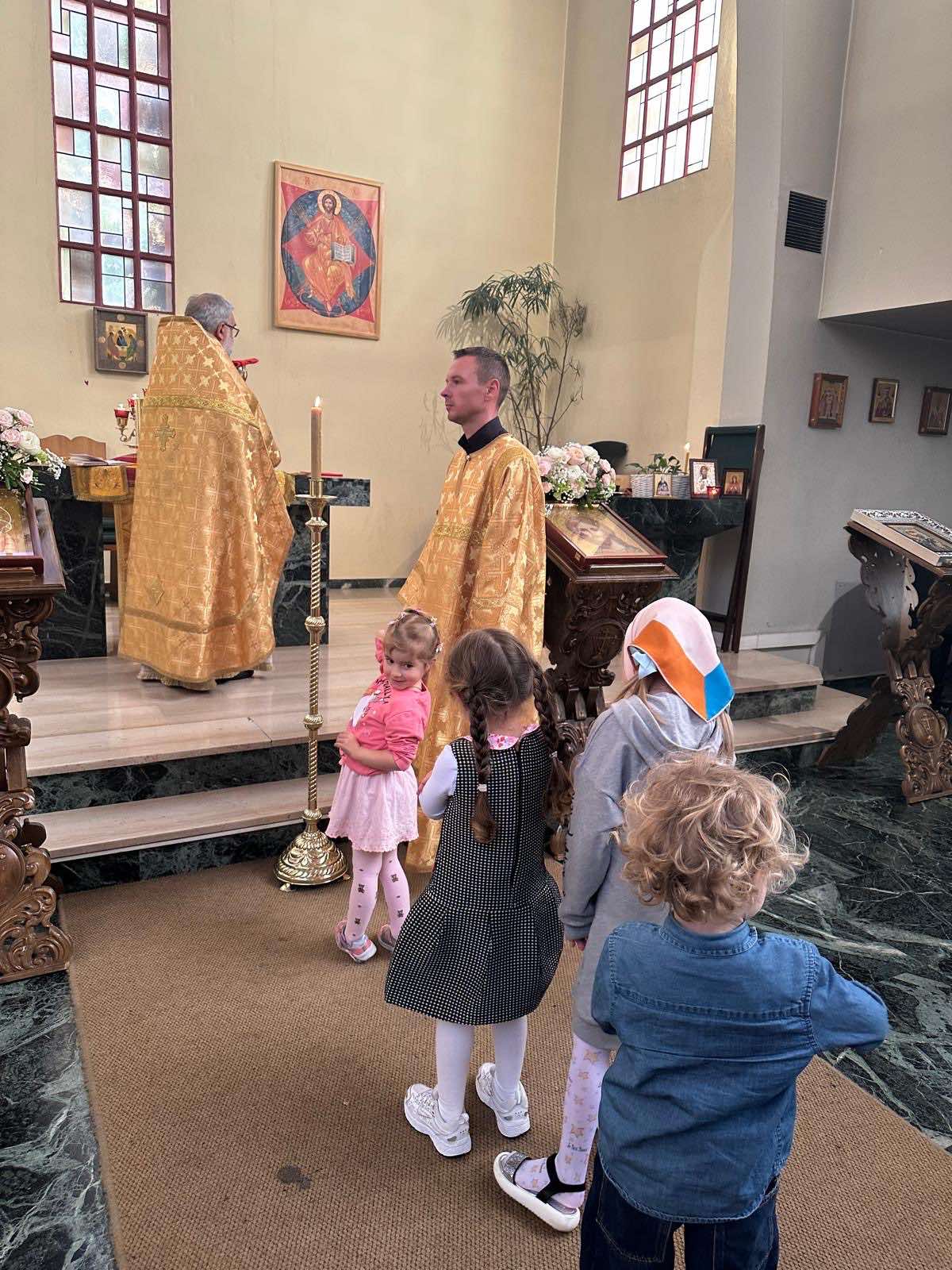
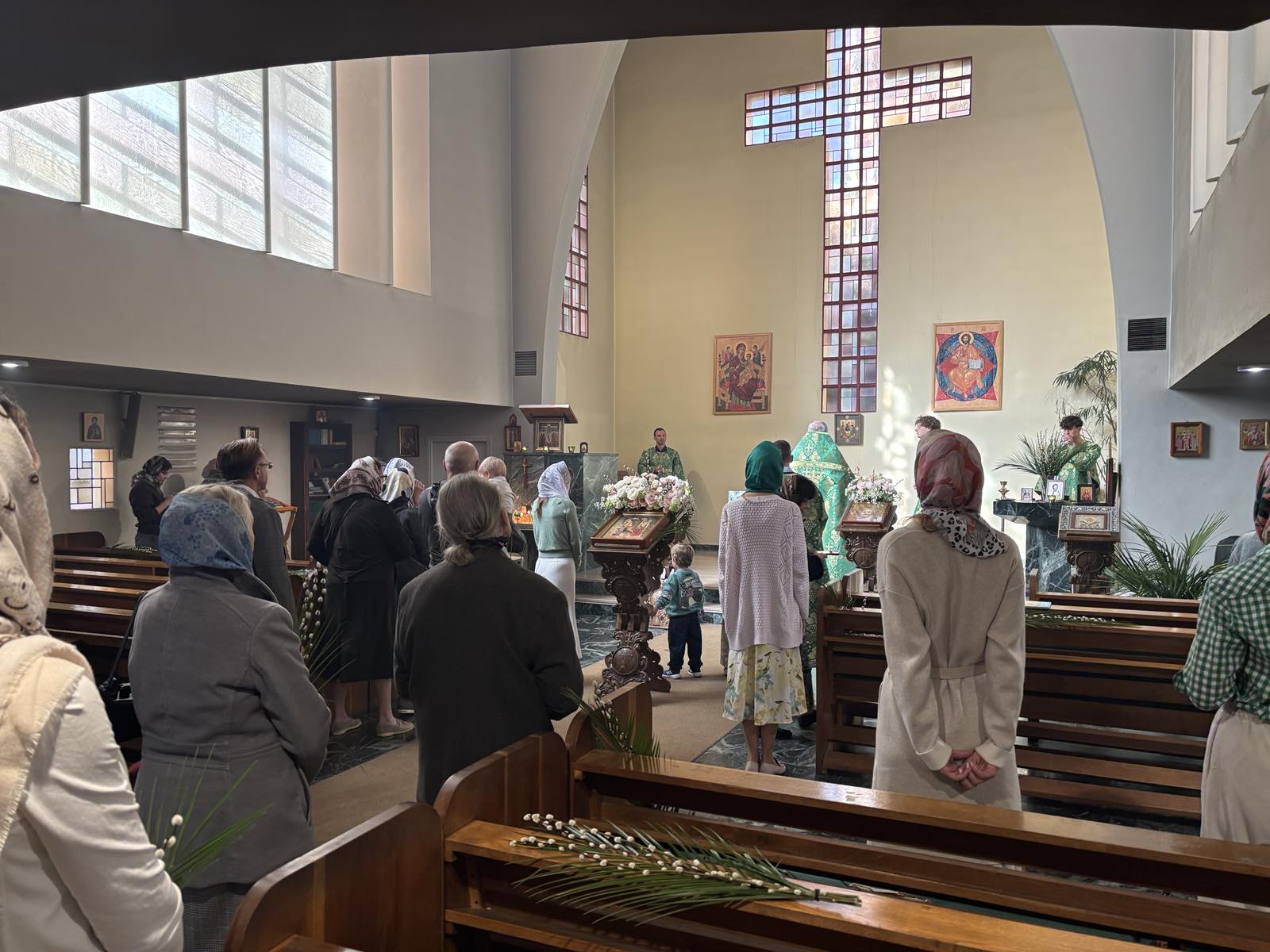
In his sermon during the service, the rector noted that the Gospel events described possess a distinctive and important feature among all the other deeds of the Lord. On the day of the Entry of the Lord into Jerusalem, Christ for the first time so openly allows Himself to be revealed to His disciples and to the people as the Messiah.
Even the outward image of this event bears a special meaning: the Lord enters Jerusalem not on foot, as was customary, but seated upon a colt. This unique occurrence in the Gospel narratives points to the fulfillment of ancient prophecies and at the same time reveals the image of the King — yet a King who is meek and humble, not earthly, but spiritual.
However, human nature remains changeable: those who today greet Christ with joy and cry out “Hosanna!” may, within a few days, turn away from Him. This calls each of us to reflect upon the depth and constancy of our own faith.
Furthermore, in the words of the rector addressed to the parishioners after the service, there was expressed the thought that the time has come to take preliminary stock of Great Lent. This period of spiritual labor, repentance, and inner striving is drawing to its close, and it is beneficial for each person to look back in order to assess the path that has been traversed.
In this connection, it is also fitting to pay attention to those events which were not extensively covered during Lent, yet bear significant spiritual importance and particular relevance for our parish.
Thus, on the 11th day, the Church commemorated the glorification and the uncovering of the relics of Saint Luke, Archbishop of Crimea (Valentin Voino-Yasenetsky), an outstanding archpastor, scholar, and physician, widely known among the Russian saints. The decision concerning his glorification and the uncovering of his holy relics took place in 1996. In the present year, this event falls on the Wednesday of the fourth week of Great Lent, that of the Veneration of the Cross.
It is especially noteworthy that one of the saint’s well-known words — his sermon “Comfort, comfort My people” — was delivered on March 23, 1952, precisely on the Sunday of the Veneration of the Cross. In it is revealed the profound meaning of the Cross of Christ as a source not only of suffering, but also of consolation, hope, and spiritual strength:
“I can say that, as the sufferings of Christ increase in you, so also the consolation of Christ will increase. Remember this, remember it well: as sufferings multiply, so your consolation will also be multiplied. Only Christ can comfort us; it is from Him that we shall seek comfort; it is by the Cross of Christ alone that we shall drive away faint-heartedness, sorrow, and murmuring.”
No less significant is his sermon for the fifth Sunday of Great Lent — “There is neither Jew nor Greek,” delivered on April 15, 1951.
In certain passages of it, thoughts are expressed that today are perceived as especially relevant.
The saint speaks of a “terrible and evil unity” among those who seek power over nations and their exploitation, emphasizing that such unions lack true unity and are inevitably destroyed by their own internal contradictions. He also points to the tendency of the strong to oppress the weak, to deprive them of their identity, and to appropriate their wealth.
At the same time, it is important to remember that every word requires careful and integral understanding. Therefore, those who wish to more deeply comprehend the thoughts of Saint Luke are encouraged to consult the full text of his sermons:
https://azbyka.ru/otechnik/Luka_Vojno-Jasenetskij/propovedi/1_48
(The sermons are presented based on materials from the website azbuka.ru. Author’s commentary.)
A special connection with these reflections is also found in the holy icon of our church — dedicated to the patrons of physicians and the sick.
It depicts Saint Luke (Valentin Voino-Yasenetsky), the Holy Great Martyr and Healer Panteleimon, and Sergey Botkin — a renowned physician who shared the tragic fate of the Imperial family, refusing to abandon them in their time of suffering.
The church of our parish is dedicated to the Holy Royal Passion-Bearers.
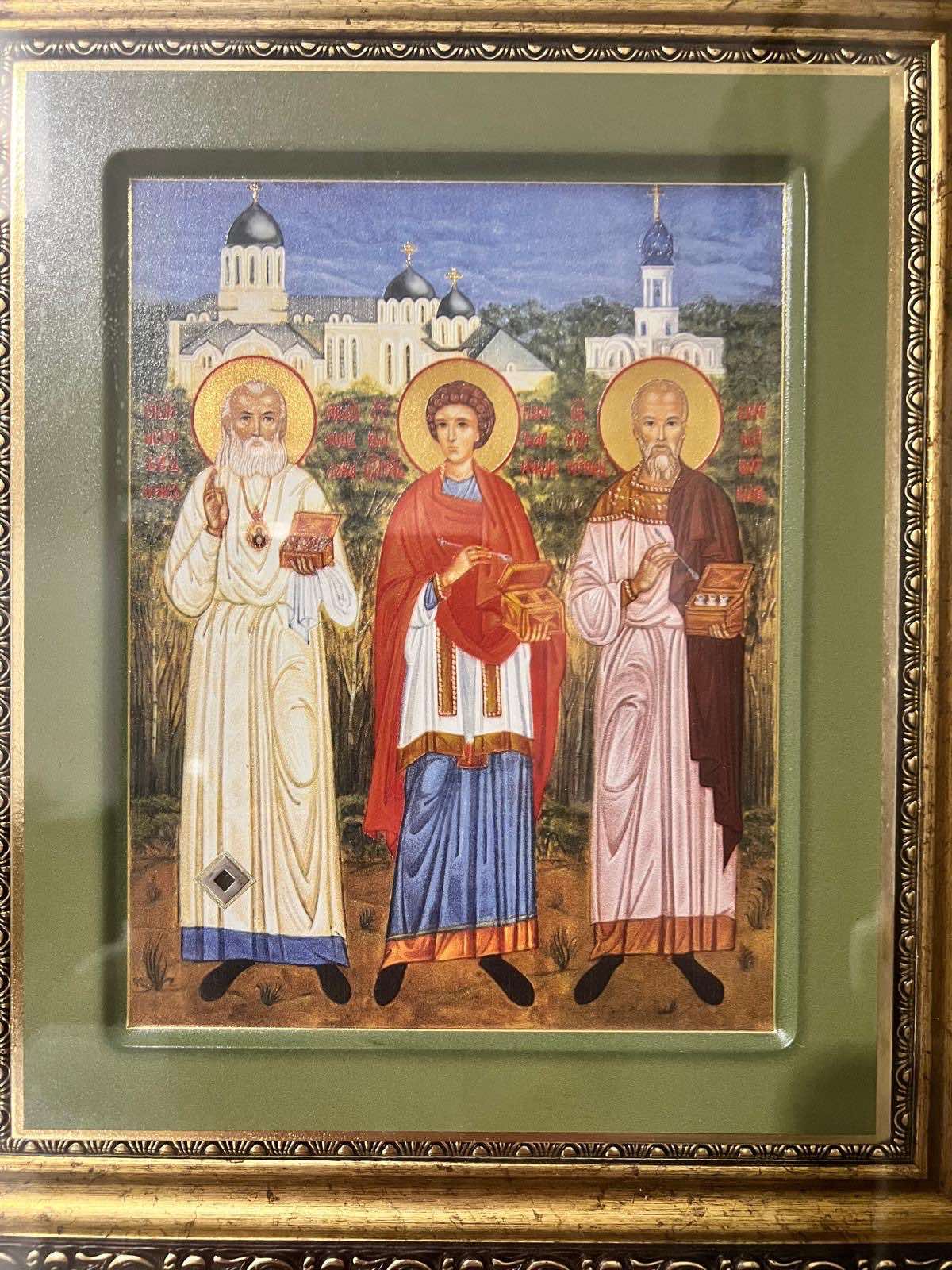
The particular value of this icon lies in the presence within it of a particle of the relics of Saint Luke, making it not only an image for prayer, but also a living testimony of spiritual communion with this great servant of God.
Naturally, this icon belongs to the more recent period, since the saints depicted upon it are, in a historical sense, almost our contemporaries. This is especially true of Sergey Botkin and Saint Luke (Valentin Voino-Yasenetsky).
At the same time, the Holy Great Martyr and Healer Panteleimon lived in the early centuries of Christianity and remains one of the most ancient and venerated physician-saints.
Thus, within this icon, different epochs are united — from the ancient Church to modern times — clearly bearing witness to the unbroken continuity of the Christian tradition of mercy and service to those who suffer.
And this unity reminds us that the feat of love, compassion, and self-sacrificial service to one’s neighbor does not depend on time, but remains the unchanging vocation of a Christian in every age.