




Monday, Tuesday, Wednesday and Thursday of the first week of Great Lent, services with the reading of the Great Penitential Canon of St. Andrew of Crete were celebrated in our parish church. The services were led by the rector of the parish, Archpriest Vadim Zakrevsky.
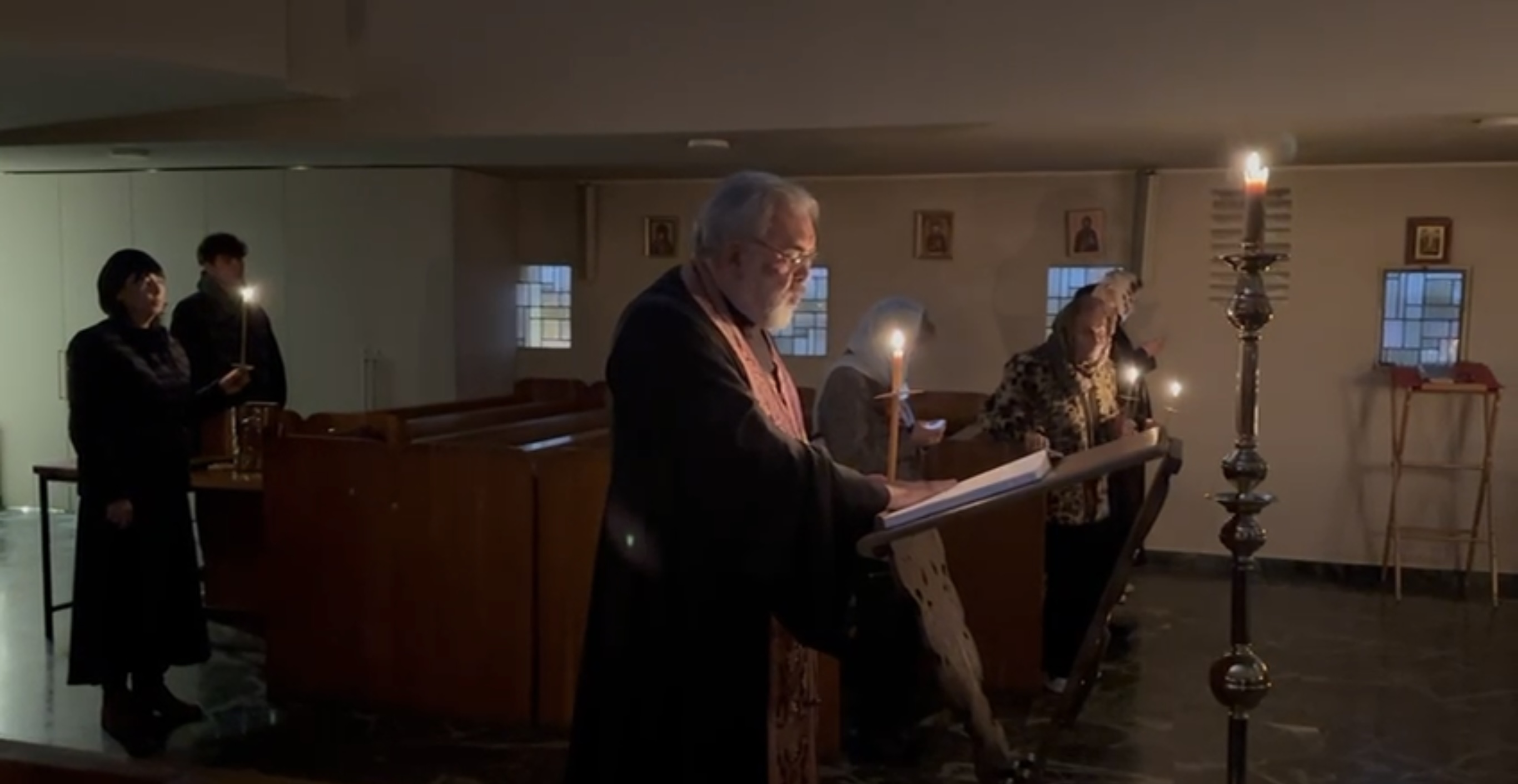
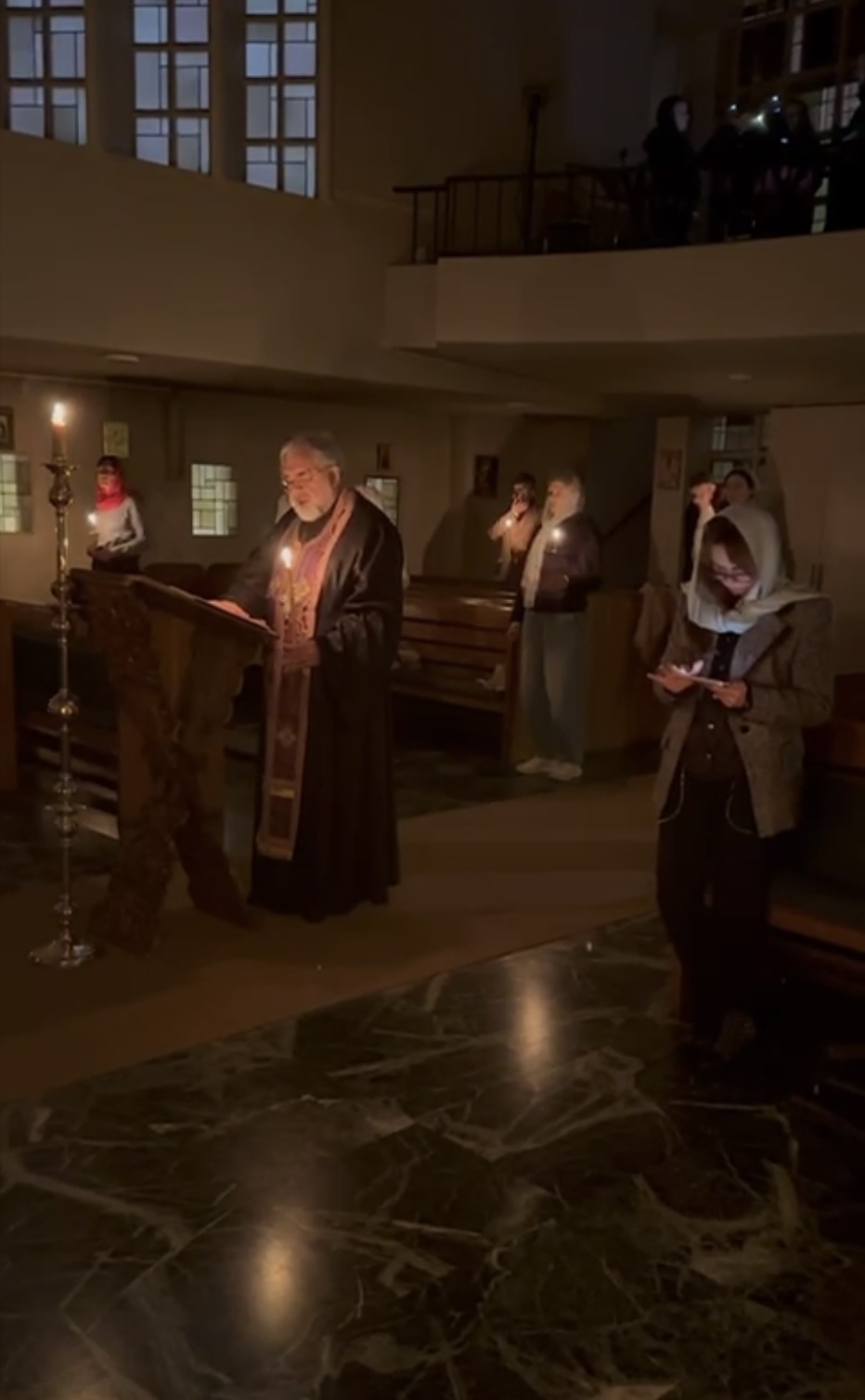
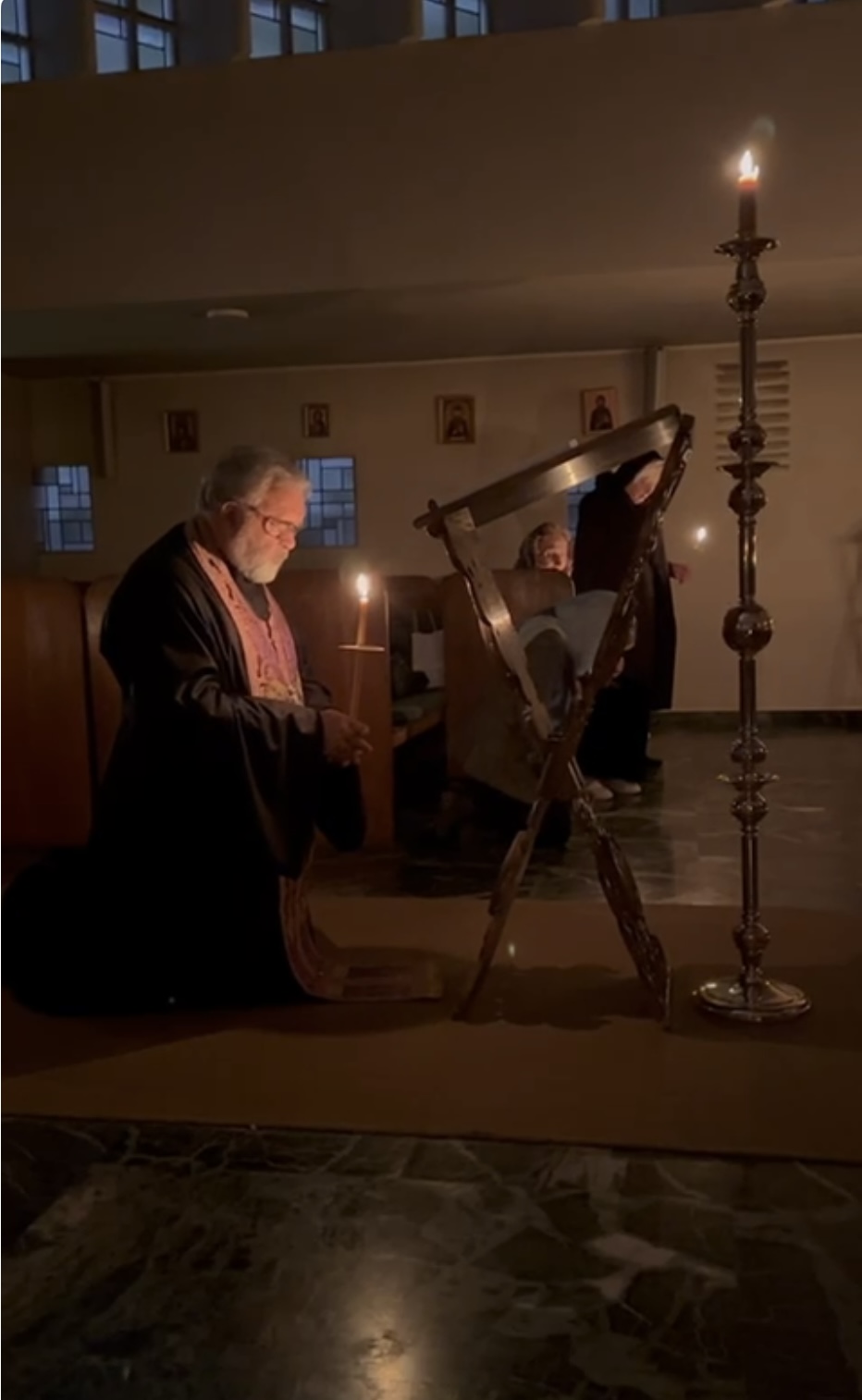
This Canon is, in essence, a guide for us on how we should conduct ourselves during Great Lent and on what we should focus. The hymn “My soul, my soul…” especially awakens sorrow for our sins.
In his addresses to the parishioners after these services, the rector emphasized several main thoughts.
First, in order to be free from sin and independent from passions, one must fast. However, fasting is not really about food. Secondly, fasting, like any human effort, requires patience, labour, and preparation. Father Vadim compared this preparation with the training of an athlete, with the difference that an athlete may receive a perishable crown of victory, while the one who truly fasts, overcoming his passions, may receive an incorruptible crown in Heaven.
In order to prepare us for Great Lent beforehand, the Church also offers such hymns as “Open to me the doors of repentance, O Giver of Life.”
It was also emphasized that one of the reasons why we cannot attain humility—and without humility true repentance is practically impossible—is pride. In this context, the rector mentioned the difference between the prayer of the Pharisee and the prayer of the Publican. Although the Pharisees lived according to the law, the humble prayer of the Publican—“Lord, cleanse me, a sinner”—was higher in the eyes of God.
An example from the life of St. Anthony the Great was also mentioned. During his ascetic life in the desert, he heard a voice from God saying that he had not attained even a part of what a simple tanner from Alexandria had attained. Astonished, Anthony went to Alexandria and asked the man what he had done to receive such mercy. The tanner replied that he did nothing special; his life was the same every day. But when Anthony insisted, the man finally said that every day he prayed, believing that all the people of Alexandria would be saved, while he alone was a sinner. This was an example of true humility, which was valued by God even above the great ascetic feats of Anthony.
It was also emphasized that the most important thing is the genuine desire for repentance and fasting in deeds, not merely in words.
Another important thought was that every person goes through the fast in his own way, and it is not pleasing to God to compare how different people keep the fast, because such comparisons are also a manifestation of pride.