



 Although the Christmas Eve has already passed, the second of the two Eves observed during the year — the Epiphany Eve on January 18 — is approaching.
As the events of the Christmas Eve service are still fresh in the memory of the parishioners, it may be appropriate to recall the guidance of the Holy Church regarding conduct and behavior during these Eve days.
Christmas Eve
Nativity Eve: 6 January; Theophany Eve: 18 January
Christmas Eve (Vespers Eve) is the day preceding the feast of the Nativity of Christ (Nativity Eve) or Theophany (Theophany Eve).
The term derives from the word sochivo — grains of wheat, rye, or oats soaked in water, traditionally a dish consumed on this day.
It is a day of strict fasting.
On Christmas Eve, the Royal Hours are celebrated and the Divine Liturgy of St. Basil the Great is served. If Christmas Eve falls on a Saturday or Sunday, the Royal Hours are served on Friday, and on Christmas Eve itself the Divine Liturgy of St. John Chrysostom is celebrated. The Divine Liturgy of St. Basil the Great is served on the very day of the feast.
How many vigils (Christmas Eves) are there, and when are they observed?
Although in the literal sense the word vigil means the eve or the previous day in relation to a feast, in church tradition this term is applied only to two feasts: the Nativity of Christ and Theophany. The eves of other feasts are simply called forefeasts. This distinction is due to two reasons:
Other feasts have one day of forefeast; therefore, the usual term forefeast simultaneously denotes the eve of the feast. For example, when we say “Forefeast of the Transfiguration of the Lord,” it is immediately clear that we are referring to 5 (18) August. However, the Nativity of Christ and Theophany have several days of forefeast, and therefore a special term is required to designate the day immediately preceding the feast. This term is precisely vigil.
On the vigils of the Nativity of Christ and Theophany, divine services are celebrated according to a special and unique order (see below). Therefore, the term vigil may refer not only to the day, but also to the church service of that day.
Thus, in the Orthodox Church there are two vigils:
6 January (24 December, Old Style) — the Vigil of the Nativity of Christ, and
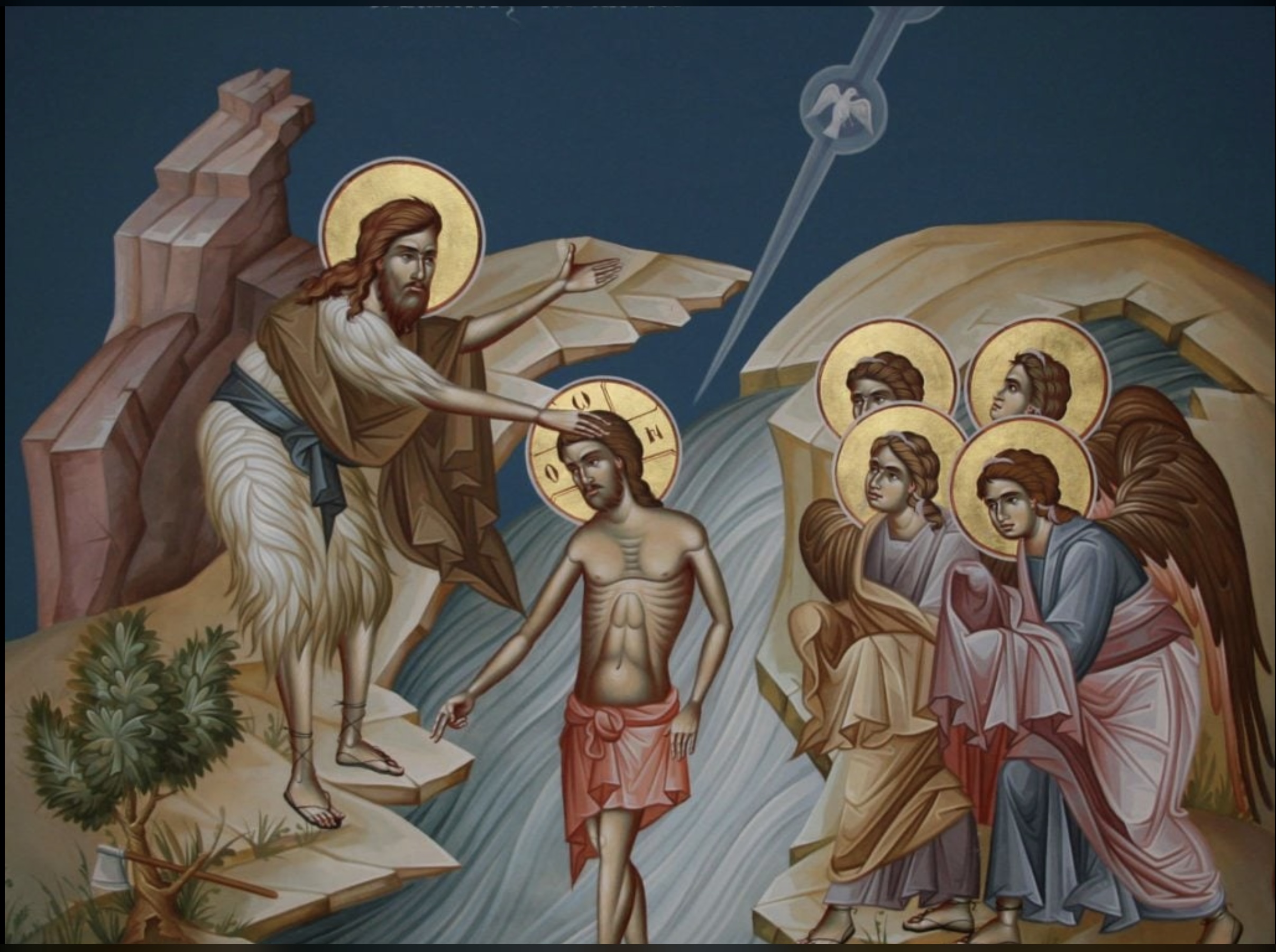
18 January (5 January, Old Style) — the Vigil of Theophany.
Both vigils are also called Christmas Eves (Sochelniki) because of the consumption of sochivo at the evening meal. It should be noted, however, that the Typikon prescribes the consumption of sochivo only for the Vigil of the Nativity of Christ, and only in the rarer case when the vigil falls on a Saturday or Sunday. Nevertheless, this particular instruction has led to the common usage of calling both days (6 and 18 January) Christmas Eves.
It should be emphasized once again that the statutory name of both days is vigils, whereas the term Christmas Eve is used in everyday speech and in literature.
The antiquity of the fast on the vigils of the Nativity of Christ and Theophany
In the Ancient Church, in the 3rd century, a combined feast of Theophany was celebrated on 6 January, uniting the commemorations of the Nativity of Christ and the Baptism of the Lord. In connection with this, the Theophany Eve on 5 January arose as a fast day, on which the liturgy was celebrated after midday and, accordingly, the meal took place only in the evening. Thus, the Theophany Eve is the most ancient one-day fast.
Subsequently, in the 4th–6th centuries (in different Local Churches at different times), the feasts were separated, and the Nativity of Christ was moved to 25 December. As a result, a Nativity Eve on 24 December also appeared, by analogy with the fast of 5 January.
On the divine services on Christmas Eve
Both Christmas Eves are characterized by a special liturgical order; at the same time, the rules of the Typikon are identical for both feasts, with the sole difference being the performance of the Great Blessing of Water at the end of the liturgy, after the ambo prayer, on the Vigil of Theophany.
“Until the first star.”
Many churchgoers, as well as people who are not fully integrated into church life, are familiar with the assertion that on Christmas Eve one should not eat until the “first star” appears. In fact, this characterization is only partially correct. As noted above, when Christmas Eve falls on a weekday, the only meal prescribed by the Typikon is supper, which is taken after Vespers combined with the Divine Liturgy of Saint Basil the Great. According to the Typikon, this service begins “at the seventh hour of the day,” that is, at approximately 1:00 p.m. by our reckoning; in such a case, it concludes around 5:00 p.m. Considering that this is wintertime, when darkness falls early, it is quite likely that stars are already visible in the sky at that time. Thus, the statutory time of the meal approximately coincides with the appearance of the conventional “first star.” However, it is important to understand that the very fact of the appearance of the “first star” has never been regarded by the Church as an “indicator” permitting the conclusion of the fast of Christmas Eve.
On the meal on Christmas Eve
Let us cite the prescriptions of the Typikon concerning food on the Christmas Eves.
Nativity Eve:
• On a weekday: supper — “we eat boiled food with oil; we do not eat fish. We drink wine, giving thanks to God.”
• On Saturday or Sunday:
daytime meal — “we partake of a piece of bread, and taste a little wine” (very modest, purely symbolic);
supper — “we enter the refectory and eat fully: we do not eat fish, but with vegetable oil, and boiled sochivo, or kutia with honey; we also drink wine to the glory of God.”
Theophany Eve:
• On a weekday: only supper; there are no separate instructions, and a reference is made to the Vigil of the Nativity of Christ.
• On Saturday or Sunday:
daytime meal — “after the dismissal of the liturgy we eat crumbs and drink a single cup of wine”;
supper — “after the dismissal of Vespers we eat fully, with oil.”
As can be seen, the prescription concerning sochivo is given only in one, rarer case — supper after the Great Vespers of the Nativity of Christ, when it is celebrated on a Saturday or Sunday. In other cases, reference is made to an ordinary Lenten meal “with wine and oil.” Thus, it is not obligatory to eat only sochivo; other Lenten dishes may also be prepared. At the same time, the Typikon warns: “as for cheese, eggs, and fish, let us not dare to touch them in any way.”
In our time, many electronic resources speak of a tradition of preparing twelve Lenten dishes on Christmas Eve. Such a pseudo-tradition fundamentally does not correspond to the Church Typikon. It is important to remember that the special rules concerning fasting on this day presuppose restrictions in the quantity of Lenten food; therefore, the meal should be standard and not abundant in Lenten dishes.
Based on materials from Azbuka.ru